
From 23 to 29 August 2026, the DEPMAT project held a summer school at Outokumpu’s Tornio site in Finland. The week-long programme gave participants the opportunity to experience stainless steel production and research at close range, combining visits to industrial production facilities with pilot-scale experiments, R&D seminars and discussions with experts in materials, processing, scrap and data science.
The summer school fits closely with the ambitions of DEPMAT – Data Enhanced Physical Models to reduce material use. The NWO Perspectief programme aims to enable the increased use of recycled material in high-quality steels without compromising product quality. Increasing recycled content inevitably introduces greater variation in material composition. DEPMAT therefore develops data-enhanced physical material models that can predict the effects of these variations and support the adaptation of processing and manufacturing conditions. Ultimately, the programme aims to contribute to closing the steel lifecycle by enabling producers and users to work with higher fractions of recycled material while maintaining reliable material and product performance.
From material input to industrial processing
The programme in Tornio provided a particularly relevant environment in which to place this research in its industrial context. The week started with an introduction to Outokumpu, the Tornio production site and its R&D activities, followed by a presentation of the R&D pilot plant and a tour of the Tornio Research Centre.
Over the following days, participants were introduced to different stages of steel production and materials development. The programme included preparation of a pilot-plant melt and a subsequent melt demonstration, as well as tours of the meltshop, hot rolling mill and cold rolling mill. These activities provided first-hand insight into the processing steps that ultimately determine the microstructure and properties of the material.
The industrial visits were complemented by discussions with Outokumpu specialists. Participants joined the Tornio R&D weekly team meeting, met with the company’s data science team and scrap experts, and took part in R&D expert discussions. An Outokumpu R&D mini-seminar offered another opportunity for exchange between researchers and industrial specialists.
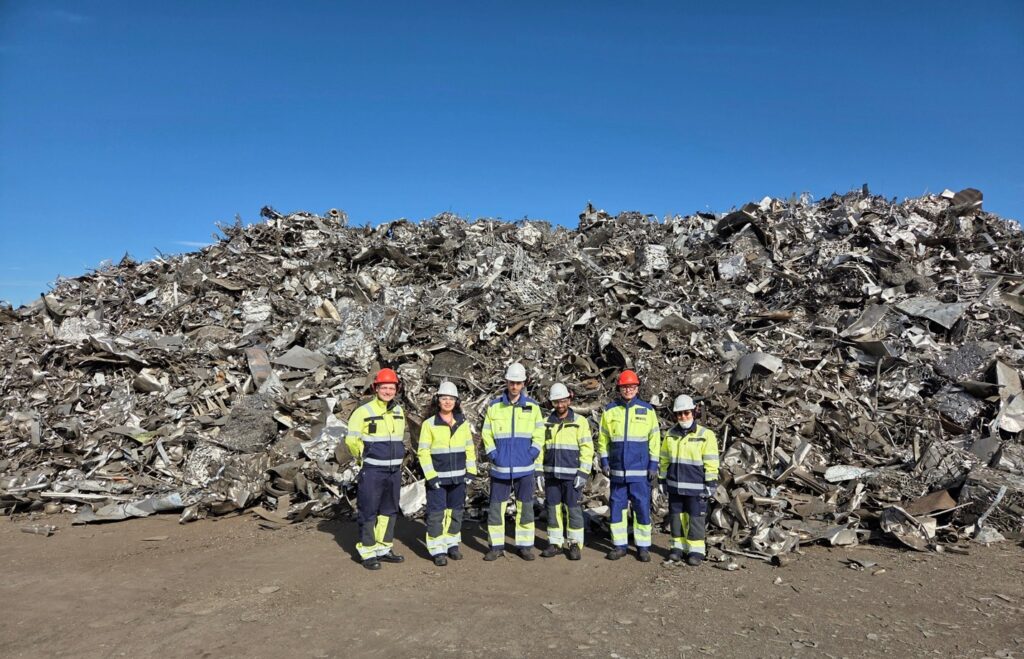
The programme also extended beyond the core processing route. Visits to the harbour, scrap yard and RAP cold rolling mill provided additional insight into material flows around the production process, while a visit to the biocoke agglomeration plant introduced another aspect of developments in steel production.
Outokumpu as an industrial partner in DEPMAT
Outokumpu is one of the industrial partners in the DEPMAT consortium and represents an important link between scientific developments within the project and the realities of industrial stainless steel production. The location Tornio (Finland) possesses expertise in steelmaking, processing, recycled material streams and industrial R&D and provides valuable input for understanding how variations in material composition influence processing and final material performance. The location Terneuzen (Netherlands) has finishing lines for processing ferritic and austenitic materials and logistic hub for operations worldwide.
Tornio is a highly relevant setting for the DEPMAT summer school. Rather than considering materials data and modelling independently from production, participants could see the physical processes behind the data: from scrap and melt preparation to pilot-scale experimentation, rolling and R&D analysis. Discussions with both materials and data-science specialists further illustrated the interdisciplinary connection between physical materials understanding, industrial process knowledge and data-driven approaches that lies at the heart of DEPMAT.
Outokumpu has a strong focus on circularity and the use of recycled raw materials in stainless steel production. This industrial experience makes the company’s contribution particularly relevant to DEPMAT’s objective of understanding and managing the material variability associated with a more circular steel value chain.
Connecting research with practice
For the participating researchers, one of the main benefits of the summer school was the opportunity to connect their scientific work with what happens at industrial scale. Seeing the different production steps directly, and being able to discuss them with specialists responsible for the processes, provided a broader context for research conducted within DEPMAT.
This was also reflected in the feedback from participants. Hoda Jamshidi, one of the researchers attending the summer school, described the week as “a very insightful and valuable experience” and particularly highlighted the importance of seeing the processes in practice:
“It was a very insightful and valuable experience to see the processes in practice and gain a better understanding of what is
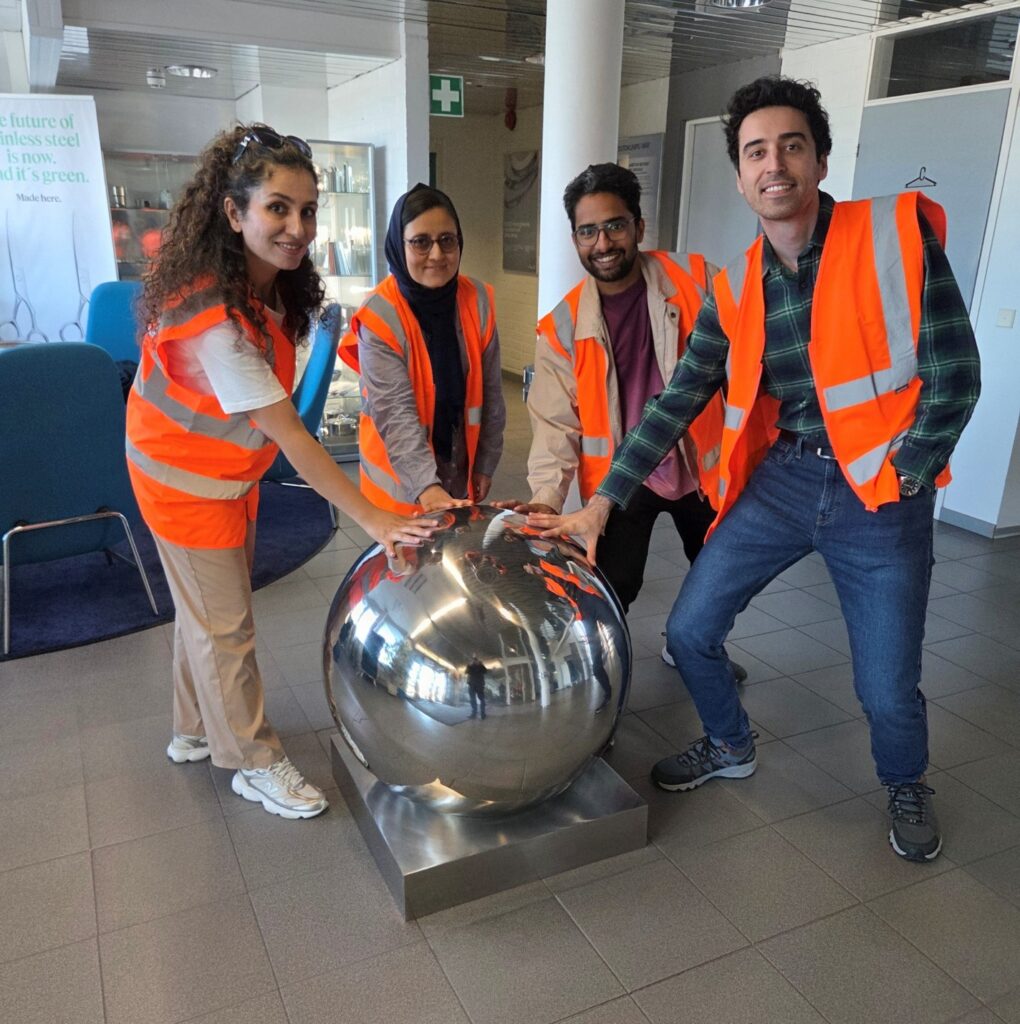
happening at each stage. We especially appreciated the opportunity to hear the explanations and insights from the experts and to connect the theory with what actually happens in practice.”
She also emphasised the atmosphere and organisation of the week:
“Thank you once again for your warm hospitality and for putting together such a well-organized and educational week. We really appreciate it!”
The feedback captures an important objective of the DEPMAT summer school: creating opportunities not only to learn about individual technologies, but also to understand how research questions relate to the complete industrial production chain.
Bringing DEPMAT research closer to industrial implementation
A central strength of DEPMAT is the connection between fundamental research, modelling and industrial implementation. The Tornio summer school brought these elements together in a concentrated programme. Pilot-plant activities showed how materials can be produced and investigated under controlled conditions, while the production tours demonstrated the scale and complexity of industrial steelmaking. Meetings with R&D, scrap and data-science experts provided the link between materials, process information and the data required to understand and ultimately predict material behaviour.
Managing variability in increasingly circular material streams is not only a modelling question. It requires understanding where variations originate, how materials respond during processing and how these variations ultimately affect performance. By bringing DEPMAT researchers directly into the Outokumpu production and R&D environment, the summer school provided a valuable opportunity to explore precisely these connections — and to strengthen the dialogue between academic research and industrial practice.