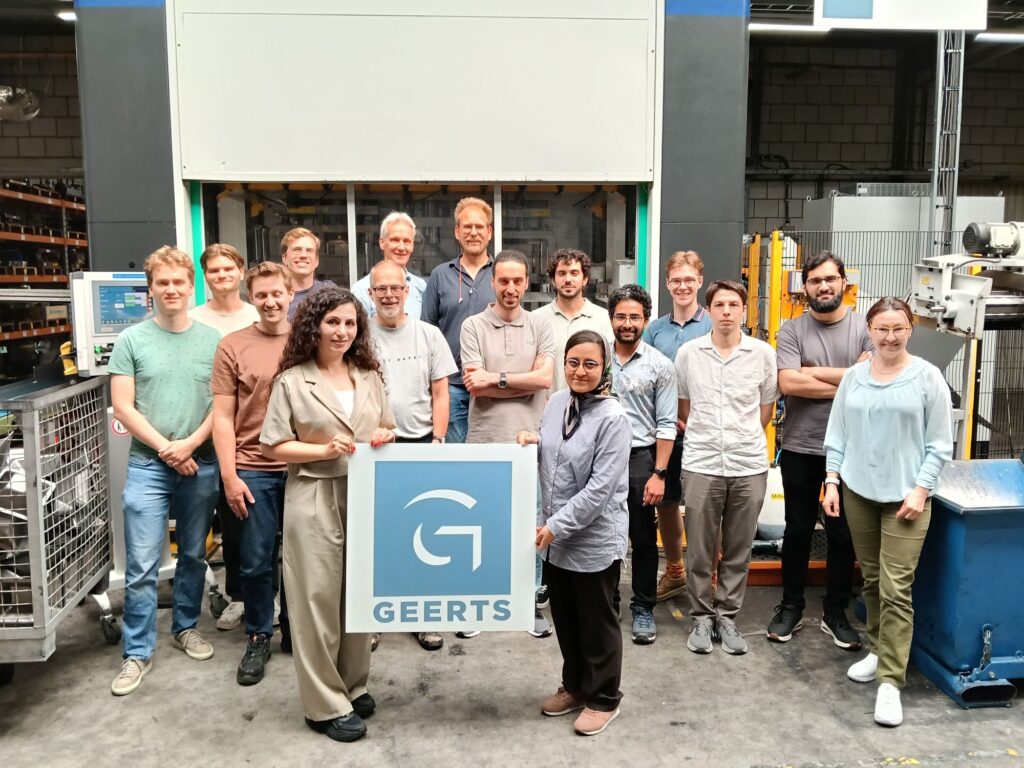
Researchers from the DEPMAT project recently visited Geerts Metaalwaren to gain deeper insight into advanced manufacturing processes for steel parts and to better understand how variations in material properties can affect production.
The visit focused on the deep drawing of steel components, a process that is highly sensitive to variations in raw materials. Even minor differences between material batches or suppliers can influence production stability and may lead to quality issues or rejects in the manufacturing process. A better understanding of these material deviations is therefore essential for reliable and efficient production.
This topic is directly connected to the circularity goals of the steel sector. To move towards a more circular economy, higher levels of recycled content need to be introduced across the steel supply chain. However, the increased use of recycled material may also lead to greater variability in material properties. The DEPMAT project addresses this challenge by developing predictive models and simulations that help assess the material-related consequences of circular production routes.
Geerts Metaalwaren is a valuable member of the DEPMAT consortium and brings important industrial expertise to the project. The company is specialised in series production using a wide range of deep drawing techniques on both hydraulic and mechanical presses. Geerts is a well-known supplier for OEMs and Tier-1 suppliers across various industries and applications.
With its unique position in the European market, Geerts Metaalwaren focuses on low-volume special products for sectors such as the food industry, medical industry, energy, ventilation technology, climate systems, water management, and transport. These sectors require a wide variety of materials, product qualities, and production approaches.
The insights gained during the visit help the DEPMAT consortium better understand the critical interactions between material properties, manufacturing processes, and circularity-driven supply chains. By combining industrial experience with data-driven modelling and simulation, the project contributes to more stable production processes and supports the transition towards circular steel value chains.